
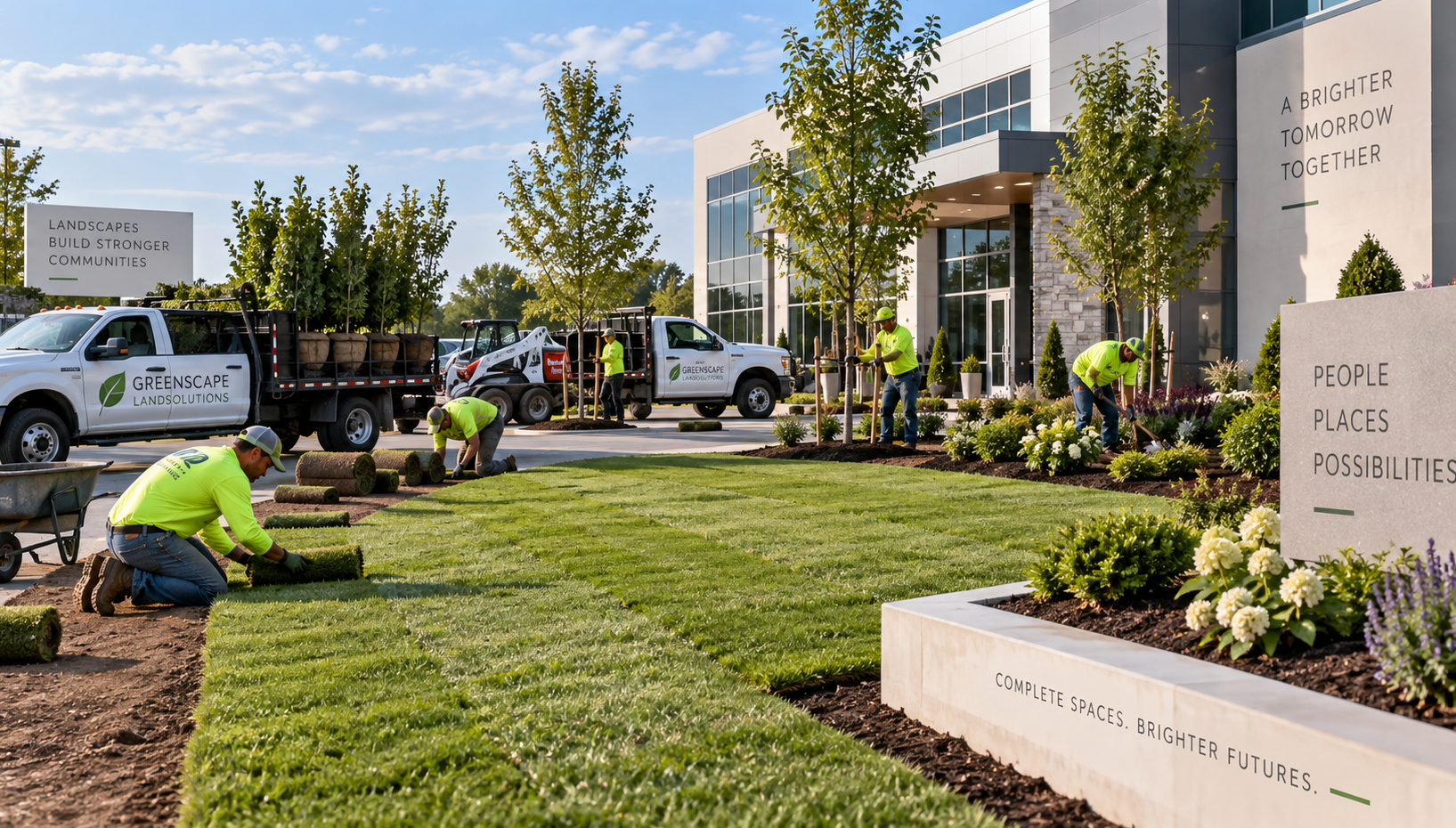
There is something special about running your first successful landscape crew.
You know the employees.
You know the truck.
You know the equipment.
You know which employee is great at irrigation, who can install pavers quickly, and who you trust to speak with the customer.
When something goes wrong, you fix it.
When the crew needs help, you jump in.
When a project starts falling behind, you know about it almost immediately.
For a while, that works.
Then the phone keeps ringing.
The schedule fills up.
Customers begin waiting longer.
And eventually you realize something:
One crew can only produce so much work.
That's when many landscape contractors begin thinking about adding another truck and another crew.
It can be one of the most exciting stages of growing a landscape company.
It can also be one of the most dangerous.
Because adding another crew doesn't simply multiply production.
It multiplies complexity.
One Crew Has a Ceiling
Imagine you operate a three-person landscape crew.
That crew can only produce so many labor hours each week.
Even if you have enough work to keep them busy for the next six months, there is still a limit to how much work three people can physically complete.
You can improve production rates.
Purchase better equipment.
Improve scheduling.
Reduce wasted time.
And you should.
But eventually, you reach the capacity of that crew.
If you want the company to continue growing, something has to change.
For many contractors, that means adding another crew.
Suddenly, instead of three people producing work, you may have six.
Instead of one project happening today, you may have two.
That's where growth begins to accelerate.
But so do the expenses.
Another Crew Is More Than Another Employee
It's easy to think about growth primarily in terms of payroll.
"If I hire three more employees, I can start another crew."
Maybe.
But what are those employees going to drive?
What equipment will they use?
Who will supervise them?
Adding another crew may require:
Another truck.
Another trailer.
Additional tools.
Additional equipment.
Increased insurance.
More uniforms and safety equipment.
Additional phones or tablets.
Increased fuel.
Additional maintenance.
More administrative support.
Then there is the biggest expense of all:
Payroll.
As we discussed previously ("Why Hiring Employees Can Make You More Money"), an employee earning $25 per hour costs the company considerably more than $25 per hour once labor burden is included.
Multiply that across another crew, and your weekly expenses can increase quickly.
That's why growth needs to be intentional.
Capacity Doesn't Matter Without Profitable Work
A second crew gives your company more capacity.
But capacity by itself doesn't make money.
The crew needs profitable work.
Imagine adding another three-person crew because your schedule is busy.
Now you need enough work to keep six employees productive.
If your estimating isn't accurate, adding another crew can actually magnify the problem.
A $500 estimating mistake on one project hurts.
Repeat similar mistakes across two crews working simultaneously, and those losses begin accumulating much faster.
Growth amplifies what already exists.
If your estimating system is profitable, growth can multiply those profits.
If your estimating system is broken, growth can multiply your losses.
That is why building the systems we discussed earlier matters before trying to scale.
Your Job Begins to Change
Something else happens when you add crews.
Your job changes.
With one crew, the owner can often remain heavily involved in production.
You can visit the jobsite.
Help install materials.
Talk directly with the customer.
Pick up forgotten supplies.
Solve problems personally.
With two or three crews, that becomes much harder.
You can't be on three jobsites at the same time.
The company now needs you to do something different.
Schedule crews.
Review estimates.
Manage customers.
Order materials.
Track production.
Develop employees.
Monitor profitability.
Solve larger problems.
Your value begins shifting away from how much landscape work you can personally install and toward how effectively you can help other people succeed.
That transition can be difficult.
But it's also one of the most important transitions a growing business owner makes.
Crew Leaders Become Critical
Your second crew needs someone you trust.
Not simply your fastest employee.
A leader.
A good crew leader needs to understand more than how to install landscaping.
They need to understand:
The project scope.
Expected labor hours.
Quality standards.
Customer communication.
Material management.
Equipment responsibility.
Safety.
Documentation.
Change orders.
Most importantly, they need to understand what success looks like before the project begins.
If an estimate allows 80 labor hours, the crew leader should know that.
If a particular task was estimated for 16 hours, tracking actual production against that estimate can help the company improve future estimates.
The estimate shouldn't disappear after the customer signs the proposal.
It should become part of the production plan.
What Gets Measured Gets Better
This is where growing companies begin learning from their own work.
Suppose you estimated 40 labor hours to install a project.
The crew completes it in 34.
That's useful information.
Why were they faster?
Better equipment?
Better access?
An experienced crew?
Maybe your production rate needs adjusting.
Now imagine the project required 52 hours.
That's useful too.
Why?
Poor access?
Unexpected soil?
Material delays?
Incorrect production rate?
Bad estimate?
The purpose isn't to punish the crew for exceeding estimated hours.
It's to understand why the difference occurred.
The more projects you measure, the better your estimating system can become.
Estimate.
Produce.
Measure.
Adjust.
Then estimate again.
That's how experience becomes a system ("Systems Beat Hard Work").
Two Crews Need More Work Than One
This sounds obvious, but it creates another challenge.
Sales.
A single crew might keep your schedule full with a certain number of projects each month.
Two crews require significantly more work.
Three crews require even more.
Now the company needs a steady flow of:
Leads.
Site visits.
Estimates.
Follow-ups.
Signed contracts.
Scheduled projects.
Suddenly, estimating itself can become a bottleneck.
If the owner is still spending hours rebuilding every estimate from scratch, the company may struggle to create proposals fast enough to feed multiple crews.
This is another reason repeatable estimating systems become increasingly valuable as the company grows.
The faster you can produce accurate, profitable estimates, the easier it becomes to keep productive crews working.
Growth Can Create Cash-Flow Pressure
More work doesn't always mean more cash in the bank.
In fact, growth can consume cash surprisingly quickly.
You may need to pay:
Payroll this Friday.
Fuel today.
Material suppliers this month.
Truck payments.
Insurance.
Equipment repairs.
Meanwhile, the customer may not pay until later.
A growing company can be profitable on paper and still struggle with cash flow.
That's why reserves become increasingly important as the company expands.
Profit from previous projects or use of banks may help provide the financial strength needed to support future growth.
This brings us back to an idea we've discussed throughout this series:
Profit gives you choices.
It gives you the ability to add a truck without panic.
Hire another employee.
Replace equipment.
Survive a slow month.
And invest in growth when the right opportunity appears.
Don't Add a Crew Just Because You're Busy
Being busy feels like growth.
It isn't always.
Before adding another crew, look at the numbers.
Are your current projects consistently profitable?
Is your existing crew productive?
Do you understand your labor burden?
Are your production rates reasonably accurate?
Do you have enough demand to support another crew?
Do you have someone capable of leading it?
Can the company financially support the additional payroll and equipment?
You don't need perfect answers.
But you should understand the risks.
The goal isn't to become bigger.
The goal is to become better and more profitable as you get bigger.
The Second Crew Shouldn't Reinvent the Company
Remember our previous discussion about systems?
This is where they begin paying off.
Your second crew shouldn't need to invent its own way of operating.
The successful systems from your first crew should begin transferring to the second.
The same estimating process.
The same production expectations.
The same quality standards.
The same equipment checklists.
The same customer communication standards.
The same job documentation.
The same process for change orders.
Not every crew will operate identically.
People aren't machines.
But the company's expectations should remain consistent through standard production rates.
That's how one successful crew becomes two successful crews instead of one successful crew and one ongoing headache.
Final Thoughts
Your first crew proves you can build a landscape company.
Your second crew begins proving you can build an organization.
That's a very different accomplishment.
With one crew, the owner can solve almost every problem personally.
With multiple crews, the company needs systems, leaders, accurate estimates, production tracking, and financial discipline.
Growth becomes less about how much work you can accomplish and more about what your company can accomplish without you personally performing every task.
One crew becomes two.
Two become three.
Eventually, trucks carrying your company's name may leave the shop every morning for projects you won't personally visit that day.
That's when you begin realizing you've built something larger than your own ability to work.
You built a company.
And like everything else we've discussed in this series, it didn't happen overnight.
It happened...
One Estimate at a Time.
Business Takeaway
Adding crews can dramatically increase a landscape company's production capacity, but growth also multiplies payroll, equipment, overhead, leadership needs, and financial risk.
Don't simply duplicate your workforce.
Duplicate a profitable system.
TLE Tip
As your landscape company grows, consistency in estimating becomes increasingly important.
The Landscape Estimator (TLE) helps contractors work from repeatable service templates, production rates, labor calculations, material quantities, company variables, and profitability targets while still allowing adjustments for the conditions of each individual project.
One estimator becomes two.
One crew becomes multiple crews.
But the estimating philosophy should remain consistent.
The goal is not simply to create more estimates.
It's to create more profitable estimates consistently.
Coming Next
Part 9: Why Gross Profit Matters More Than Revenue
A million dollars in sales sounds impressive.
But how much of that million dollars did your company actually keep?
In the next article, we'll explore why revenue alone can be misleading, how gross profit helps reveal the financial health of your projects, and why growing sales without protecting margins can sometimes make a company's problems worse.
Because the goal isn't simply to build a bigger landscape company.
It's to build a profitable one.
Keep reading
More updates, releases, and estimating ideas are in the newsroom.