
One million dollars.
That's a number many landscape contractors dream about.
The million-dollar landscape company.
It sounds successful.
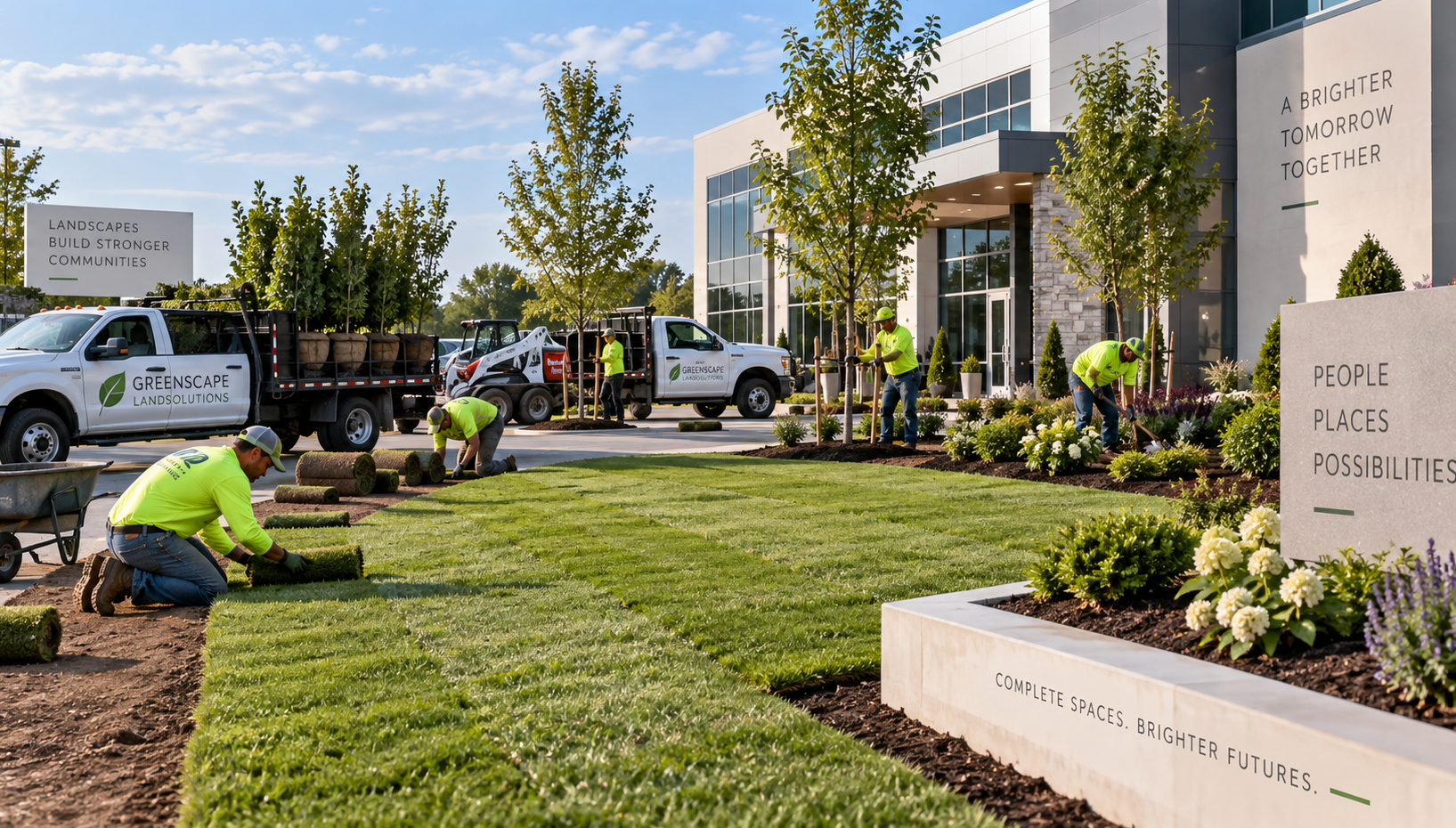
Ten trucks in the parking lot.
Multiple crews leaving the shop every morning.
Employees wearing company uniforms.
Equipment everywhere.
Projects happening across town.
From the outside, the company looks like it has made it.
But there's a question that matters far more than how much the company sold:
How much gross profit did those sales produce?
A landscape company can generate a tremendous amount of revenue and still struggle financially.
That's because revenue tells you how much work you sold.
It doesn't tell you how well you priced it.
Revenue Is Only the Beginning
Revenue is fairly easy to understand.
If your company completes $1,000,000 worth of landscape projects during the year, you've generated $1,000,000 in revenue.
That's worth celebrating.
But the company doesn't get to keep that entire million dollars.
It had to spend money to produce those projects.
Employees had to be paid.
Materials had to be purchased.
Equipment had to operate.
Subcontractors may have been hired.
Those costs begin reducing that million dollars very quickly.
This is where gross profit becomes important.
In simple terms:
Revenue – Direct Costs = Gross Profit
Depending on how your accounting system is structured, those direct costs may also be called cost of goods sold (COGS) or cost of sales as an example.
For a landscape contractor, they commonly include costs directly associated with producing the work, such as field labor and labor burden, project materials, subcontractors, and certain equipment or other direct project costs.
The important part isn't memorizing an accounting definition.
It's understanding what the number is telling you.
Two Million-Dollar Companies Can Be Very Different
Imagine two landscape companies.
Both generate $1,000,000 in annual revenue.
Company A spends $850,000 in direct costs producing that work.
Its gross profit is:
$1,000,000 – $850,000 = $150,000
Company B spends $650,000 producing the same amount of revenue.
Its gross profit is:
$1,000,000 – $650,000 = $350,000
Both companies can say:
"We're a million-dollar landscape company."
But financially, those companies are in very different positions.
Company A has $150,000 of gross profit remaining to help pay the company's overhead and other operating expenses.
Company B has $350,000.
That's a $200,000 difference without selling one additional dollar of work.
Revenue tells us the size of the companies' sales.
Gross profit begins telling us how effectively those sales are being produced.
Gross Profit Is Not Net Profit
This distinction is important.
Gross profit is not necessarily the money the owner takes home.
The company still has expenses to pay.
Depending on how the business organizes its accounting, those expenses may include things such as:
Office and administrative payroll.
Rent or shop expenses.
General business insurance.
Accounting and bookkeeping.
Advertising.
Phones and internet.
Software.
Professional services.
Office expenses.
Other company overhead.
After those expenses are considered, we begin moving toward net profit.
A simple way to think about it is:
Revenue – Direct Costs = Gross Profit
Then:
Gross Profit – Operating Expenses = Operating Profit
Additional items such as interest and taxes may still affect the company's final net income.
For this article, however, we're focusing on gross profit because it helps answer an important question:
Are the projects we're selling producing enough money to support the company?
Gross Profit Percentage Makes Comparison Easier
Gross profit dollars are useful.
Gross profit percentage can be even more useful.
The basic calculation is:
Gross Profit ÷ Revenue × 100 = Gross Profit Percentage
Let's return to our two companies.
Company A:
$150,000 ÷ $1,000,000 = 15% gross profit
Company B:
$350,000 ÷ $1,000,000 = 35% gross profit
Now the difference becomes even easier to see.
For every dollar of revenue Company A produces, approximately 15 cents remains as gross profit before overhead.
For Company B, approximately 35 cents remains.
That percentage gives the business owner another way to compare projects, divisions, crews, and even different years of company performance.
More Revenue Can Sometimes Make Things Worse
This sounds strange.
How could selling more work hurt a company?
Imagine your estimates consistently fail to recover the true cost of labor.
Every project you sell has the same pricing problem.
At $250,000 in annual revenue, the problem hurts.
At $1 million, you've multiplied it.
At $3 million, you've multiplied it again.
More sales don't automatically repair poor estimating.
Sometimes they simply create more opportunities to lose money.
That's why I would rather see a contractor understand the profitability of a $500,000 company before aggressively trying to turn it into a $1 million company.
Growth should multiply something that already works.
Every Estimate Contributes to Gross Profit
This is where estimating becomes more than simply calculating what a customer should pay.
Every estimate contributes to the financial performance of the company.
Suppose a project sells for $20,000.
Your direct costs are $14,000.
The project produces:
$6,000 in gross profit
The gross profit percentage is:
$6,000 ÷ $20,000 = 30%
Now imagine your direct costs were actually $16,000 because labor took longer than expected.
The same $20,000 project now produces:
$4,000 in gross profit
Or:
20%
The customer paid exactly what you expected.
Revenue didn't change.
But profitability did.
This is why estimating accuracy matters.
A few additional labor hours.
Material waste.
A missed delivery charge.
Incorrect production rates.
Unpriced equipment.
Small mistakes can slowly reduce the gross profit you thought the project would produce.
Estimate It, Then Measure It
One of the most valuable habits a landscape company can develop is comparing estimated results with actual results.
Before the project:
What gross profit did we estimate?
After the project:
What gross profit did we actually produce?
If the numbers are different, ask why.
Maybe labor exceeded the estimate.
Maybe materials increased in price.
Maybe the crew finished faster than expected.
Maybe equipment improved production.
Maybe site conditions slowed the project.
Maybe the estimate was simply wrong.
The purpose isn't to blame the estimator or the crew.
The purpose is to learn.
Every completed project gives you information that can improve the next estimate.
Different Work Can Produce Different Results
Not every landscape service produces the same financial result.
Your company might discover that irrigation work performs differently from planting.
Maintenance may perform differently from construction.
Paver projects may perform differently from sod installation.
Small residential projects may perform differently from large commercial projects.
This doesn't automatically mean one type of work is "good" and another is "bad."
It means you need to understand your numbers.
Once you begin measuring gross profit by project type, you may discover which services are contributing most effectively to the business—and which ones deserve a closer look.
That information can influence estimating, production, equipment purchases, training, marketing, and even the types of projects you pursue.
Don't Confuse Markup With Margin
This is another area where contractors can get into trouble.
Markup and gross profit margin are not the same thing.
Suppose something costs you $100.
If you add a 30% markup:
$100 × 1.30 = $130 selling price
You made $30 of gross profit.
But your gross profit margin isn't 30%.
It's:
$30 ÷ $130 = approximately 23.1%
That's an important distinction.
If your company wants to achieve a particular gross profit margin, simply applying that same percentage as a markup will not produce the result you expect.
Knowing the difference between markup and margin helps prevent one of the most common pricing misunderstandings in contracting businesses.
Gross Profit Gives the Business Room to Operate
Why does gross profit matter so much?
Because the company still has to exist tomorrow.
Gross profit helps provide the money from which the company pays its overhead and works toward producing net profit.
Without sufficient gross profit, it becomes harder to:
Hire administrative support.
Invest in better software.
Market the company.
Train employees.
Build financial reserves.
Improve systems.
Develop managers.
And ultimately produce sustainable net profit.
A company can look extremely busy while financially starving itself.
Trucks moving all over town don't necessarily mean the business is making money.
Sometimes they simply mean the business is busy.
Bigger Isn't Always Better
There is nothing wrong with wanting to build a million-dollar landscape company.
Or a five-million-dollar company.
Or something much larger.
Growth can create tremendous opportunities for employees, customers, and owners.
But revenue shouldn't become the scoreboard by itself.
If sales increase 25%, what happened to gross profit?
If you added another crew, did gross profit improve?
If you purchased new equipment, did production improve enough to justify it?
If you landed the largest project in company history, did it actually perform as estimated?
Those questions tell you far more about the health of the company than revenue alone.
Final Thoughts
Revenue gets attention.
Profit builds companies.
The trucks, equipment, crews, and projects people see are often the result of years of financial decisions they never see.
The labor rate you corrected.
The production rate you improved.
The material markup you adjusted.
The project you decided not to chase.
The estimate you reviewed one more time before sending.
Each decision may only change the profitability of one project slightly.
But multiply those decisions across hundreds of estimates and the results become significant.
Don't build your company simply to produce more revenue.
Build it to produce profitable work.
Because a million dollars in sales may sound impressive.
But understanding what those sales actually produce is what helps you build a company that lasts...
One Estimate at a Time.
Business Takeaway
Revenue tells you how much work your landscape company sold.
Gross profit tells you how much remains after the direct costs of producing that work.
Track both—but don't mistake growing sales for growing profitability.
The goal isn't simply to sell more work.
The goal is to sell and produce profitable work consistently.
TLE Tip
A profitable estimate should do more than total labor and materials.
The Landscape Estimator (TLE) helps contractors build estimates using company variables, labor costs, production rates, materials, project conditions, and profitability considerations.
But the estimate is only the beginning.
Compare your estimated labor, costs, and profitability with the actual results after completing the project.
Over time, those comparisons can help you refine production rates, improve pricing decisions, and create stronger estimates.
Better information creates better estimates.
And better estimates help create healthier companies.
Coming Next
Part 10: The Owner Is the Bottleneck
You built the company.
Customers trust you.
Employees come to you with questions.
You review the estimates.
You solve the problems.
And eventually, you may become the very thing preventing the company from growing.
In the next article, we'll explore how owners unintentionally become bottlenecks—and why learning to delegate decisions, develop leaders, and trust the systems you've built is essential to creating a company that can grow beyond you.
Because eventually, the question changes from:
"How much can I accomplish?"
to:
"How much can my company accomplish without needing me involved in everything?"
Keep reading
More updates, releases, and estimating ideas are in the newsroom.