
Most landscape business owners aren't afraid of hard work.
In fact, hard work is probably what helped build the company in the first place.
Early mornings.
Late estimates.
Weekend phone calls.
Loading trucks before sunrise.
Finishing proposals after everyone else has gone home.
When you're building a small business, your willingness to work harder than everyone else can be one of your greatest advantages.
But eventually, something changes.
The company grows.
More customers.
More employees.
More trucks.
More estimates.
And suddenly, working harder isn't enough.
At some point, every growing landscape company has to make the transition from relying on hard work to relying on systems.
Hard Work Has a Limit
There are only so many hours in a day.
You can arrive earlier.
Stay later.
Work Saturdays.
Answer emails at night.
But eventually, you run out of hours.
This creates a problem for growing companies.
If every estimate requires the owner's involvement...
If every employee needs the owner's direction...
If every customer question comes back to the owner...
If every purchasing decision requires the owner's approval...
Then the owner eventually becomes the company's greatest limitation.
Not because the owner isn't working hard enough.
Because the business has grown beyond what one person can manage.
That's when systems become important.
What Is a Business System?
A system is simply a repeatable way of completing something.
It doesn't need to be complicated.
A system might be:
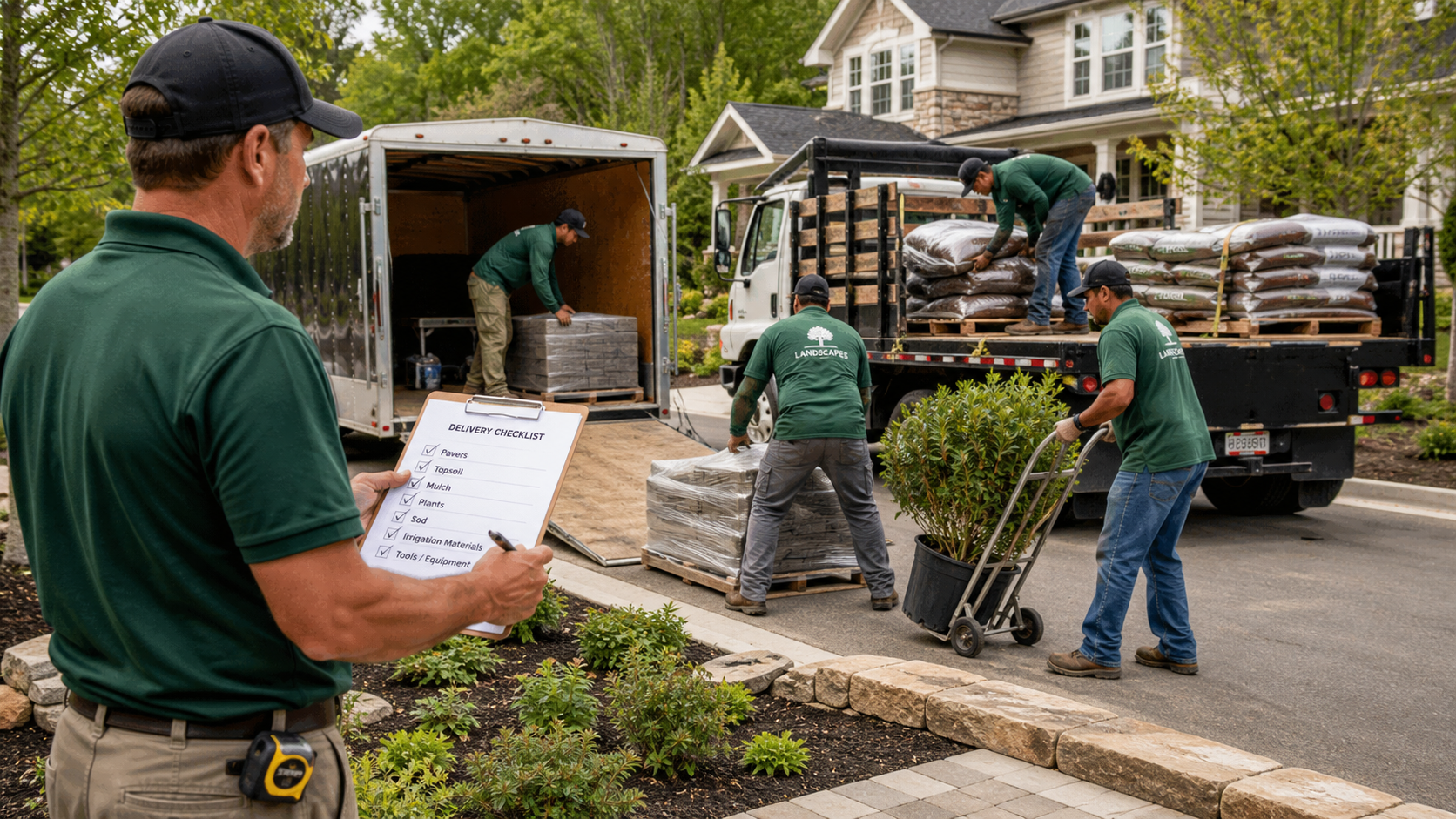
A morning crew checklist.
A standard estimating process.
A material ordering procedure.
A vehicle inspection checklist.
A customer follow-up process.
A production rate for installing plants.
A standard method for preparing proposals.
Systems answer a simple question:
"How do we do this here?"
When that answer exists only inside the owner's head, the company depends on the owner.
When the answer becomes a repeatable process, the company begins depending on the system.
That's an important difference.
Estimating Is a System
Think about how many contractors begin estimating.
A customer calls.
You visit the property.
Take measurements or approximating sizes.
Think about how long the project might take.
Call suppliers for prices.
Go home.
Open a spreadsheet, notebook, or estimating program.
Then start building the estimate.
That process may work perfectly well when you're creating a few estimates each week.
But what happens when you have ten? Twenty?
What happens when someone else needs to estimate?
Without a system, every estimate may be built differently.
One estimator remembers travel time. Another doesn't.
One includes material waste. Another forgets.
One uses the correct production rate.
Another estimates from memory.
Small inconsistencies eventually become expensive mistakes.
A repeatable estimating system helps ensure the same important questions are considered every time.
Production Rates Create Consistency
Production rates are one of the simplest examples of turning experience into a system.
An experienced contractor may know that a particular task should take a certain amount of time.
The problem is that knowledge often stays with the contractor.
Once that knowledge is measured and documented, it becomes something the entire company can use.
Instead of asking:
"How long do you think this will take?"
The estimator can ask: "What is our production rate?"
That doesn't mean every project is identical.
Site access changes. Slopes change. Weather changes.
Soil conditions change. Project difficulty changes. You get the idea.
A good system should allow adjustments for real-world conditions.
The difference is that you're adjusting from a consistent starting point rather than starting from a guess every time.
Systems Allow Employees to Succeed
Hiring employees creates capacity.
Systems help employees use that capacity effectively.
Imagine hiring a new crew leader and simply saying:
"Go run the job the way I would."
That employee now has to guess what you mean.
Instead, imagine giving that crew leader a clear process for:
Reviewing the project scope.
Loading materials.
Confirming equipment.
Communicating with the customer.
Tracking labor (trenching hours, sod laying hours, etc.)
Documenting changes or creating change orders.
Completing the final walkthrough.
Now the employee doesn't have to guess what success looks like.
The system provides direction.
Good systems don't eliminate judgment.
They create a foundation that allows employees to make better decisions.
Systems Protect Profit
Small mistakes cost money.
Forgetting a delivery charge.
Missing drive time.
Ordering too much material.
Sending the wrong equipment.
Underestimating labor.
Forgetting a change order.
One mistake may not hurt very much.
Repeated hundreds of times, those mistakes can consume a significant amount of profit.
Systems help reduce those mistakes.
A checklist may save ten minutes.
A production rate may recover one labor hour.
A material database may prevent an outdated price from being used.
An estimating template may remind you to include a cost that otherwise would have been forgotten.
Individually, those improvements seem small.
But as we discussed in the previous article, small profits become big companies.
Systems are one of the ways you protect those small profits.
Systems Make Growth Repeatable
Imagine operating one successful landscape crew.
You have a great crewlead.
The truck is organized.
The crew knows what to do.
Projects consistently finish near the estimated labor hours.
Customers are happy.
Now you want to add a second crew.
Without systems, you may spend months trying to recreate the first crew.
With systems, much of what made the first crew successful can be repeated.
The same estimating process.
The same morning checklist.
The same quality standards.
The same production expectations.
The same customer communication process.
The goal isn't to make every employee identical.
The goal is to make successful results repeatable.
That's how one crew becomes two, three crews.
And eventually, the company grows beyond what the owner could personally accomplish.
Don't Build Systems for Everything at Once
The idea of creating systems can feel overwhelming.
Don't try to document your entire company tomorrow.
Start with the areas where mistakes happen most often.
Ask yourself:
"What problem do we keep having?"
Maybe crews repeatedly forget equipment.
Create a loading checklist.
Maybe material quantities are inconsistent.
Create standard material calculations.
Maybe estimates take too long.
Build estimating templates or use online platforms.
Maybe projects regularly exceed estimated labor.
Begin tracking production rates.
Solve one recurring problem. Then solve another.
Over time, those individual improvements become the operating system of your company.
Technology Should Support the System
Software doesn't automatically create a successful business.
A poor process entered into great software is still a poor process.
Technology becomes valuable when it makes a good process easier to repeat.
That's particularly important with estimating.
A contractor shouldn't have to rebuild the estimating process from scratch every time a customer calls.
Labor rates, Production rates, Material costs, Markup, Gross profit targets, Company information, Proposal formatting, etc. Wasting time repeating tasks.
Many of these decisions can become part of a repeatable system while still allowing the estimator to adjust for the unique conditions of each project.
Technology should reduce repetitive work while allowing experienced contractors to use their judgment where it matters.
That's when software becomes more than another tool.
It becomes part of the company's system.
Final Thoughts
Hard work may help you build your first successful landscape project.
It may help you earn your first customers.
It may even help you build your first crew.
But hard work alone can't scale forever.
Eventually, successful companies have to capture what works and make it repeatable.
The estimate that consistently produces profit.
The checklist that prevents forgotten equipment.
The production rate that improves labor accuracy.
The process that allows a new employee to succeed.
None of those systems replace hard work.
They make hard work more valuable.
Because the goal isn't to build a company where everyone simply works harder.
It's to build a company where great people can consistently produce great results...
One Estimate at a Time.
Business Takeaway
Hard work can start a landscape company, but systems allow it to grow while increasing its bottom line (profits). When successful processes are documented and repeated, the business becomes less dependent on the owner and more capable of producing consistent results through its entire team.
TLE Tip
Estimating is one of the most important systems in a landscape company.
The Landscape Estimator (TLE) allows contractors to establish company variables and work through service templates using repeatable production rates, labor calculations, material costs, and profitability targets. The estimator can still adjust labor, materials, difficulty, crew size, and other project variables when real-world conditions require it.
The goal isn't to remove the contractor's experience from estimating.
It's to turn that experience into a repeatable and profitable system.
Coming Next
Part 7: Understanding the Hidden Costs of Landscaping
Your hourly wage isn't your true labor cost, and the materials on your invoice aren't the only expenses your company has to recover.
In the next article, we'll look beyond the obvious costs of a landscape project and explore payroll burden, vehicles, fuel, insurance, equipment, licensing, software, overhead, and other expenses that quietly affect profitability.
Because before you can price your work correctly, you need to understand what it truly costs to operate your business.
Keep reading
More updates, releases, and estimating ideas are in the newsroom.