
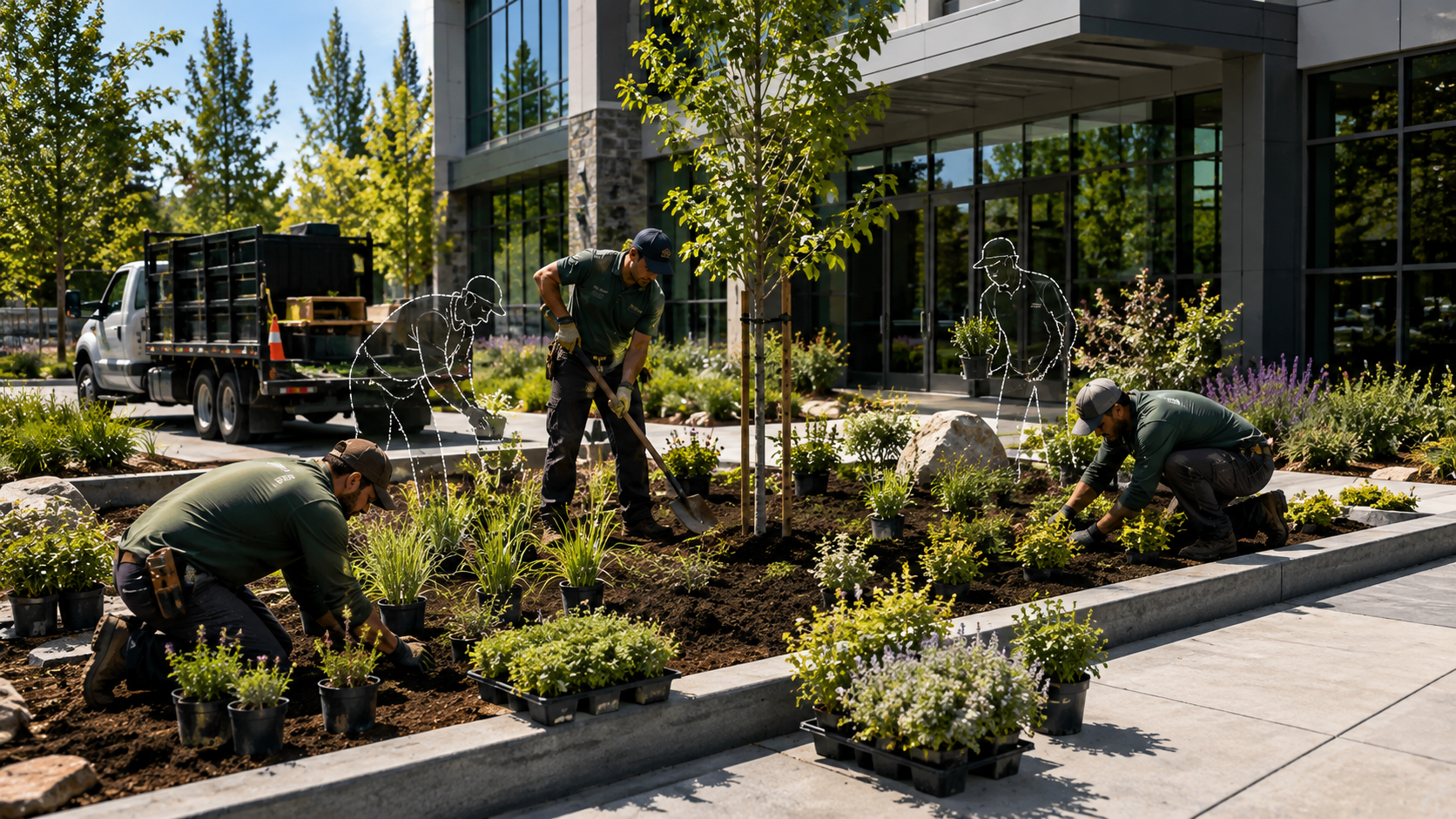
Every landscape contractor reaches a point where the work begins to pile up.
The phone rings more often.
Estimates take longer to complete.
Projects begin stacking up on the schedule.
At first, this feels like success.
Then something changes.
You realize you can only do so much by yourself.
Most business owners have the same thought.
"I can't afford to hire employees."
I remember thinking exactly the same thing.
Payroll looked expensive.
Workers' compensation insurance.
Payroll taxes.
Tools.
Uniforms.
Training.
The costs seemed overwhelming.
But eventually I learned something that completely changed how I viewed employees.
The right employees aren't simply an expense.
They're capacity.
And capacity creates opportunity.
One Person Can Only Do So Much
No matter how experienced you become, there are only so many hours in a day.
You can only install so many plants.
Lay so many pavers.
Repair so many irrigation systems.
Eventually, your business reaches a ceiling.
Not because there isn't enough work.
Because there isn't enough capacity.
Hiring employees isn't about replacing yourself.
It's about multiplying what your company can accomplish.
Employees Cost Money…
There's no reason to pretend otherwise.
Employees are one of the largest investments a landscape company makes.
Beyond hourly wages, employers also pay for:
Payroll taxes
Workers' compensation insurance
Unemployment insurance
Paid time off (if offered)
Training
Safety equipment
Uniforms
Payroll processing
Benefits (when applicable)
These costs are real.
Ignoring them during estimating can quickly eliminate profit.
A $25-per-hour employee often costs considerably more than $25 per hour to employ.
Successful contractors don't estimate using an employee's hourly wage alone—they estimate using their true labor cost, often referred to as labor burden.
Labor burden includes the additional costs of employing someone beyond their hourly wage. Understanding this number is essential because every estimate you prepare must recover not only wages, but also the costs of employing the people who complete the work.
Whether you're a one-truck startup or a company with multiple crews, accurately calculating your true labor cost is one of the foundations of a profitable business.
We'll explore labor burden in much greater detail in a future article, but for now, remember this:
If you don't know what your employees truly cost, you can't accurately estimate what your projects should cost.
Capacity Creates Revenue
Now let's look at the other side.
Imagine you work alone and complete three landscape projects each week.
Now imagine hiring one productive employee.
Together, you complete five projects instead of three.
Yes, payroll increased.
But so did production.
More importantly, your company now has the capacity to serve more customers, generate more referrals, and produce more revenue without requiring you to work longer hours.
Employees don't just increase expenses.
They increase what your business is capable of producing.
Good Estimates Make Good Hiring Decisions
Hiring should never be based on hope.
It should be based on numbers.
Before adding another employee, ask yourself:
Do I have enough profitable work to keep this person productive?
Are my estimates accurately recovering labor costs?
Can my current workload support another crew member?
Will this hire increase our production enough to justify the investment?
When your estimates are built correctly, these questions become much easier to answer.
Instead of guessing, you're making informed business decisions.
Leadership Is the Next Investment
Hiring employees is only the beginning.
As your company grows, someone has to lead those employees.
That's often the owner at first.
Eventually, however, great companies develop crew leaders, foremen, and managers who help maintain quality, productivity, and customer satisfaction.
Leadership isn't another expense.
It's another form of capacity.
The best landscape companies don't simply hire more employees.
They develop leaders who multiply the effectiveness of every crew.
Great Employees Deserve Great Companies
The best employees have choices.
They want to work for companies that:
Provide steady work.
Invest in training.
Communicate clearly.
Value safety.
Treat people with respect.
Offer opportunities to grow.
Those things require profitable estimates.
Healthy companies create healthy workplaces.
Profit doesn't only benefit the owner.
It creates better opportunities for everyone.
Growth Requires Letting Go
One of the hardest lessons for many business owners is accepting that they can't do everything themselves.
Every successful company reaches a point where the owner must stop trying to complete every task and begin building a team.
That isn't losing control.
It's creating the opportunity for your company to continue growing.
The goal isn't to work harder forever.
The goal is to build a business that can accomplish more because of the people who are part of it.
Final Thoughts
Hiring your first employee can feel intimidating.
Hiring your fifth can feel even more challenging.
But every successful landscape company eventually reaches the point where growth depends on people.
Employees aren't simply another line item on your payroll.
They're the people who install your work.
Represent your company.
Serve your customers.
And create the capacity that allows your business to grow beyond what one person could ever accomplish alone.
When you hire thoughtfully, estimate accurately, recover your true labor costs, and build a culture people want to be part of, employees become one of the greatest investments your company can make.
Because great landscape companies aren't built by one person.
They're built by teams...
One Estimate at a Time.
Business Takeaway
Employees should never be viewed as just another expense. When supported by accurate estimating, an understanding of true labor costs, strong leadership, and consistent systems, they create the capacity that allows a landscape business to grow profitably.
TLE Tip
Successful landscape companies don't estimate using hourly wages alone—they estimate using true labor cost. The Landscape Estimator (TLE) helps contractors recover labor burden, payroll costs, production time, and profitability so every estimate reflects the real cost of completing the work.
Coming Soon: We'll explore how to calculate labor burden, payroll expenses, and your company's true hourly labor cost so you can build even more accurate and profitable estimates.
Coming Next
Part 6: Systems Beat Hard Work
Every successful landscape company eventually discovers that working harder isn't enough. In the next article, we'll explore how systems, standard operating procedures, production rates, and repeatable estimating processes create consistency, improve profitability, and allow businesses to grow without relying on one person to do everything.
Keep reading
More updates, releases, and estimating ideas are in the newsroom.