
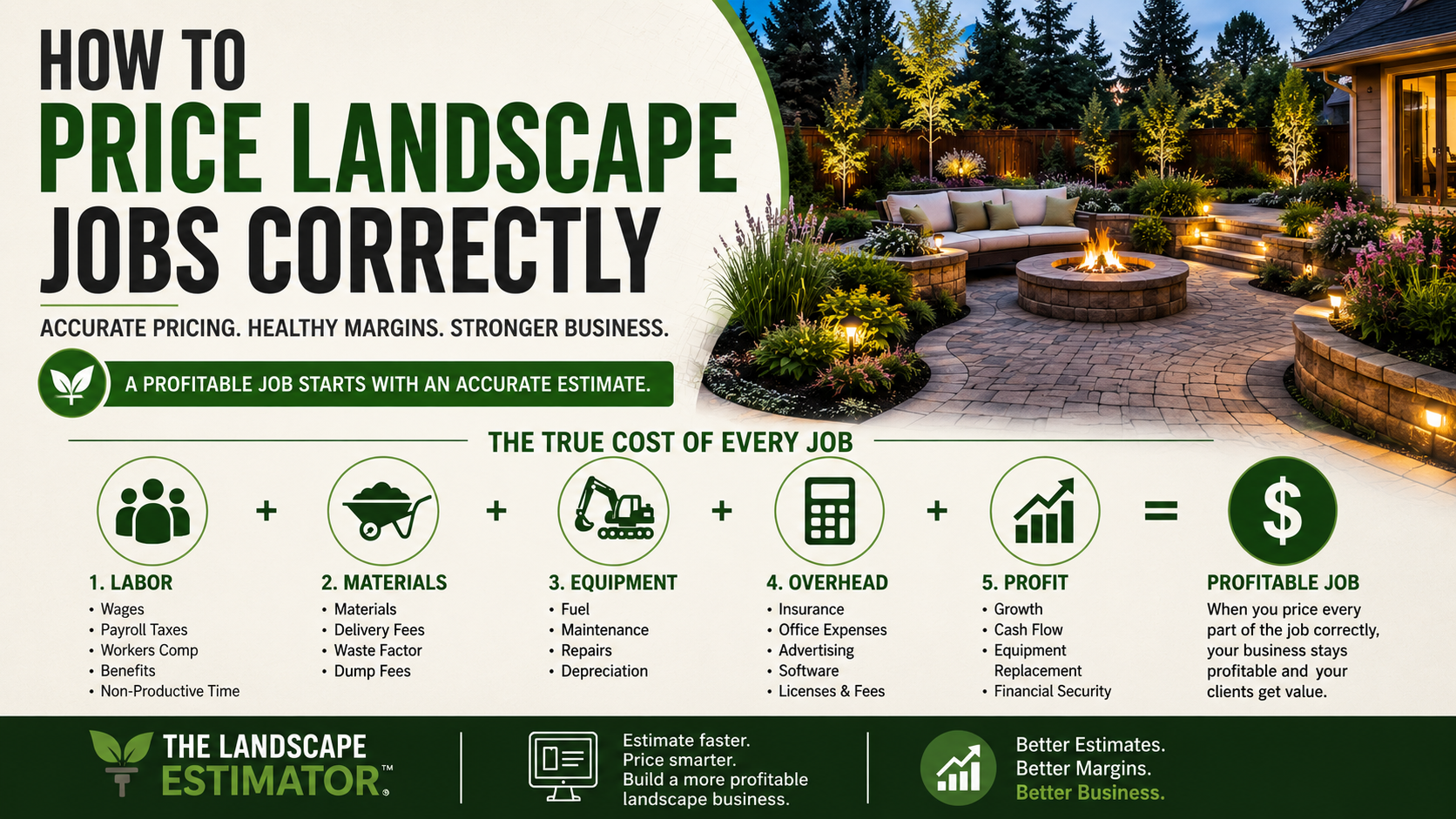
Running a profitable landscaping business takes more than great workmanship. One of the biggest challenges landscapers face is pricing jobs correctly. The price is too low, and you lose money. The price is too high, and you risk losing the project altogether.
The truth is, many landscaping companies underbid jobs without realizing it. Materials, labor, equipment wear, fuel costs, overhead, and unexpected delays all add up quickly. Successful landscapers understand that accurate estimating is what separates profitable companies from struggling ones.
At The Landscape Estimator (TLE), we believe landscape pricing should be fast, accurate, and profitable.
Why Accurate Landscape Pricing Matters
Incorrect pricing can damage your business in several ways:
Low profit margins
Cash flow problems
Employee payroll stress
Increased business debt
Burnout from working harder for less profit
Difficulty growing your company
Many landscapers rely on old spreadsheets, guesswork, or “what feels right” pricing methods. While that may work for small jobs occasionally, it often leads to missed costs and shrinking profits over time.
Professional estimating creates consistency and helps you understand exactly where your money is being made.
The 5 Core Costs Every Landscape Job Should Include
Before you can price landscape jobs correctly, you need to understand every cost involved in the project.
1. Labor Costs
Labor is usually one of the largest expenses in landscaping.
Your labor calculations should include:
Employee wages
Payroll taxes (Federal, State, Local, etc.)
Workers compensation insurance
Paid breaks and downtime
Drive time
Supervision time
Many landscapers only calculate hourly pay and forget the true burdened labor cost.
For example, an employee making $25/hour may actually cost your company $35–$45/hour after taxes, insurance, and overhead are included.
2. Material Costs
Every material should be accounted for carefully, including:
Plants
Bark dust
Sod
Seed
Pavers
Base rock
Irrigation components
Lighting materials
Material pricing should also include:
Delivery fees
Waste factors
Pickup time
Dump fees
Supplier price increases
Wholesale costs marked up to retail prices
Even small material miscalculations can significantly reduce profit margins.
3. Equipment Costs
Your equipment is not free to operate.
Landscape job pricing should include:
Fuel
Maintenance
Repairs
Trailer expenses
Depreciation
Equipment replacement costs
Mowers, excavators, compactors, dump trailers, and skid steers all create operating expenses that must be recovered through your pricing.
4. Overhead Expenses
This is where many landscapers struggle.
Overhead includes:
Office expenses
Insurance
Phones
Software
Advertising
Licensing
Shop rent
Vehicles
Administrative time
Even if a specific job does not directly “use” these items, every project must contribute toward keeping the business running. This is usually a ‘fixed’ price included in part of every job.
5. Profit Margin
Profit is not leftover money.
Profit should be intentionally built into every estimate.
Without profit:
You cannot grow
You cannot replace equipment
You cannot survive slow seasons
You cannot scale your business
Healthy landscape companies typically target profit margins that allow long-term stability and future investment. Example: Gross profit margin = Sale price - Direct job costs.
Common Landscape Pricing Mistakes
Underestimating Labor Time
This is one of the most common mistakes in landscaping.
Unexpected delays happen constantly:
Weather
Material shortages
Access issues
Irrigation repairs
Cleanup time
Equipment loading and unloading
Experienced estimators build realistic production rates into their pricing.
Forgetting Small Costs
Small costs add up quickly:
Stakes
Fertilizer
Trash bags
Fasteners
Delivery charges
Dump fees
Missing dozens of “small” items across projects can cost thousands of dollars per year.
Using Old Spreadsheets
Many landscapers still rely on Excel or handwritten estimating systems.
While spreadsheets can work, they often:
Take too long
Create inconsistent pricing
Increase human error
Make updates difficult
Slow down the estimating process
Modern estimating systems help landscapers create faster, more accurate estimates while maintaining consistent profit margins.
How Professional Landscapers Price Jobs
Most successful landscapers use a structured estimating process.
A typical process includes:
Site measurements
Material takeoffs
Labor calculations
Equipment allocation
Overhead percentages
Profit markup
Final proposal creation
The goal is not simply winning jobs. The goal is winning profitable jobs.
Why Estimating Speed Matters
Fast estimating can directly impact sales.
Homeowners often contact multiple contractors. Companies that respond quickly with professional estimates often gain a competitive advantage.
The faster you can produce accurate pricing:
The more bids you can complete
The more leads you can follow up with
The more projects you can close
This is one reason many landscapers are moving away from traditional spreadsheets and toward specialized estimating platforms.
How TLE Helps Landscapers Price Jobs More Accurately
The Landscape Estimator (TLE) was built to help landscapers simplify estimating and improve pricing accuracy.
Our service templates currently include:
Sod
Seed
Plants
Pavers
Bark Dust
General Maintenance
TLE helps landscapers:
Reduce estimating time
Improve pricing consistency
Track labor and material costs
Build more accurate proposals
Move beyond outdated spreadsheets
Our goal is simple:
Help landscapers price jobs correctly before the work ever begins.
Final Thoughts
Pricing landscape jobs correctly is one of the most important skills a landscaping business can develop. Accurate estimating protects profit margins, improves consistency, and creates long-term business stability.
The most successful landscapers understand that estimating is not just paperwork — it is the financial foundation of the company.
If your current estimating process feels slow, inconsistent, or difficult to manage, it may be time to modernize your workflow.
Because in landscaping, profitable jobs start with accurate estimates.
Keep reading
More updates, releases, and estimating ideas are in the newsroom.