
One Estimate at a Time: How Million-Dollar Landscape Companies Are Built
Every successful landscape company starts the same way.
Not with ten trucks.
Not with a beautiful office.
Not with dozens of employees.
It starts with one estimate.
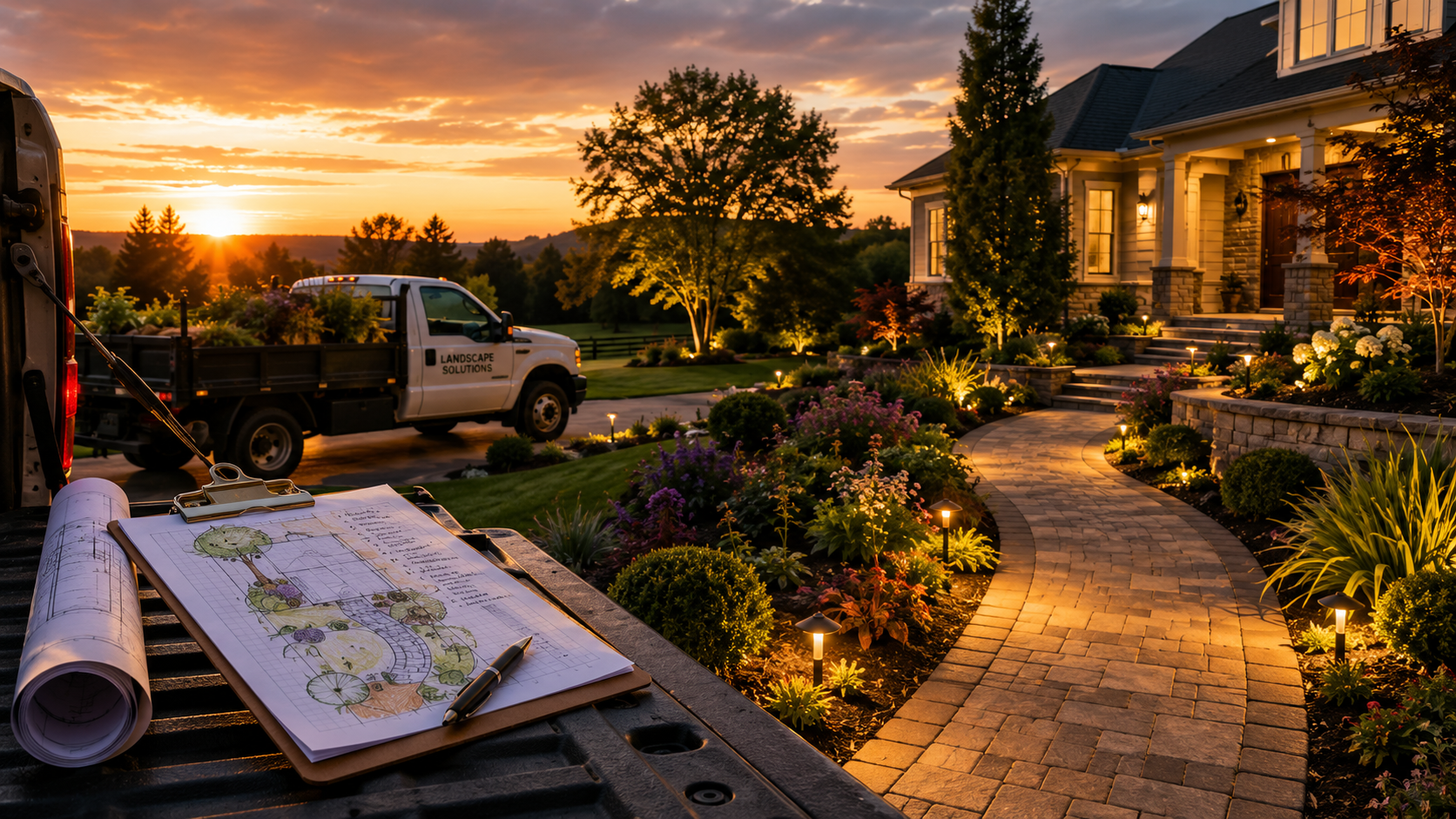
For many contractors, that first estimate is written at the kitchen table, in the garage, or in the front seat of a pickup truck after finishing another day's work. The company may own only a few tools, one truck, and a dream of building something bigger.
Every successful landscape company, regardless of its size today, once stood at that exact same starting point.
There Is No Million-Dollar Project
Many people believe the secret to building a million-dollar landscape company is landing one huge commercial contract.
In reality, most successful companies grow much differently.
They build one profitable estimate.
Then another.
And another.
One satisfied customer leads to another customer.
One completed project leads to another referral.
One truck eventually becomes two.
Two crews eventually become four.
Growth doesn't happen because of one giant opportunity.
It happens because thousands of small decisions are made correctly over many years.
Every Estimate Is an Investment
An estimate is much more than a price.
It represents a business decision.
Every estimate answers questions such as:
Will this project be profitable?
Can my crew complete it efficiently?
Have I accounted for labor and materials?
Am I protecting my company for the future?
Every estimate either moves your company forward or quietly moves it backward.
Many contractors lose money without realizing it because they underestimate labor, forget overhead expenses, or simply guess at pricing.
Those small mistakes may not seem important on one project.
Repeated hundreds of times, however, they can prevent a company from ever reaching its potential.
Small Improvements Create Extraordinary Results
Imagine improving just one part of your business.
Perhaps your estimates become only 2% more accurate.
Or maybe your crews save fifteen minutes on every project because materials are planned more effectively.
Those improvements may seem insignificant.
Now multiply those improvements across:
200 projects per year
Five years in business
Multiple crews
Small improvements become significant financial gains.
The companies that appear successful overnight are usually the ones that have been making small improvements consistently for years.
The Difference Between Revenue and Success
Many contractors dream of building a million-dollar company.
Revenue alone, however, does not create success.
A company producing one million dollars in annual sales can still struggle with:
Poor cash flow
Low profit margins
High employee turnover
Inconsistent estimating
Operational inefficiencies
The goal isn't simply to produce more revenue.
The goal is to build a profitable company with systems that continue producing results year after year.
Throughout this series, we'll focus on building profitability first. Revenue naturally follows profitable systems.
Building Systems Instead of Guessing
As companies grow, complexity increases.
More customers.
More employees.
More equipment.
More estimates.
The companies that continue growing eventually replace guesswork with systems.
They create:
Standard estimating processes
Production rates
Material databases
Proposal templates
Operating procedures
Systems create consistency.
Consistency creates profitability.
Profitability creates opportunity.
This Is Only the Beginning
This article is the first in our One Estimate at a Time series.
Over the coming weeks, we'll explore the practical side of building a profitable landscape company, including:
Understanding labor production
Building profitable estimates
Growing from one crew to multiple crews
Hiring managers and developing leaders
Creating a company culture that attracts great employees
Building lasting customer relationships
Understanding financial metrics that drive business growth
Each article will build on the previous one, giving you the tools to grow your company one profitable decision at a time.
Final Thoughts
Every landscape company has a starting point.
No one begins with multiple crews, experienced managers, or a million dollars in annual revenue.
Successful companies are built through thousands of well-made decisions.
One estimate.
One customer.
One completed project.
One employee.
One leader.
Over time, those individual decisions become something much larger than any single project.
They become a business.
Because million-dollar landscape companies aren't built overnight.
They're built...
One Estimate at a Time.
Business Takeaway
Don't focus on building a million-dollar company tomorrow.
Focus on creating one profitable estimate today.
Repeat that process consistently, and your business will be built on a solid foundation rather than good luck.
TLE Tip
Successful estimating isn't about creating the fastest proposal—it's about creating a repeatable process that consistently produces profitable work. That's the philosophy behind The Landscape Estimator (TLE): helping contractors build systems that support long-term business growth.
Coming Next
Part 2: Every Estimate Is a Business Decision
We'll explore why estimating is much more than assigning a price and how consistent estimating systems become one of the strongest competitive advantages a landscape company can have.
Keep reading
More updates, releases, and estimating ideas are in the newsroom.