
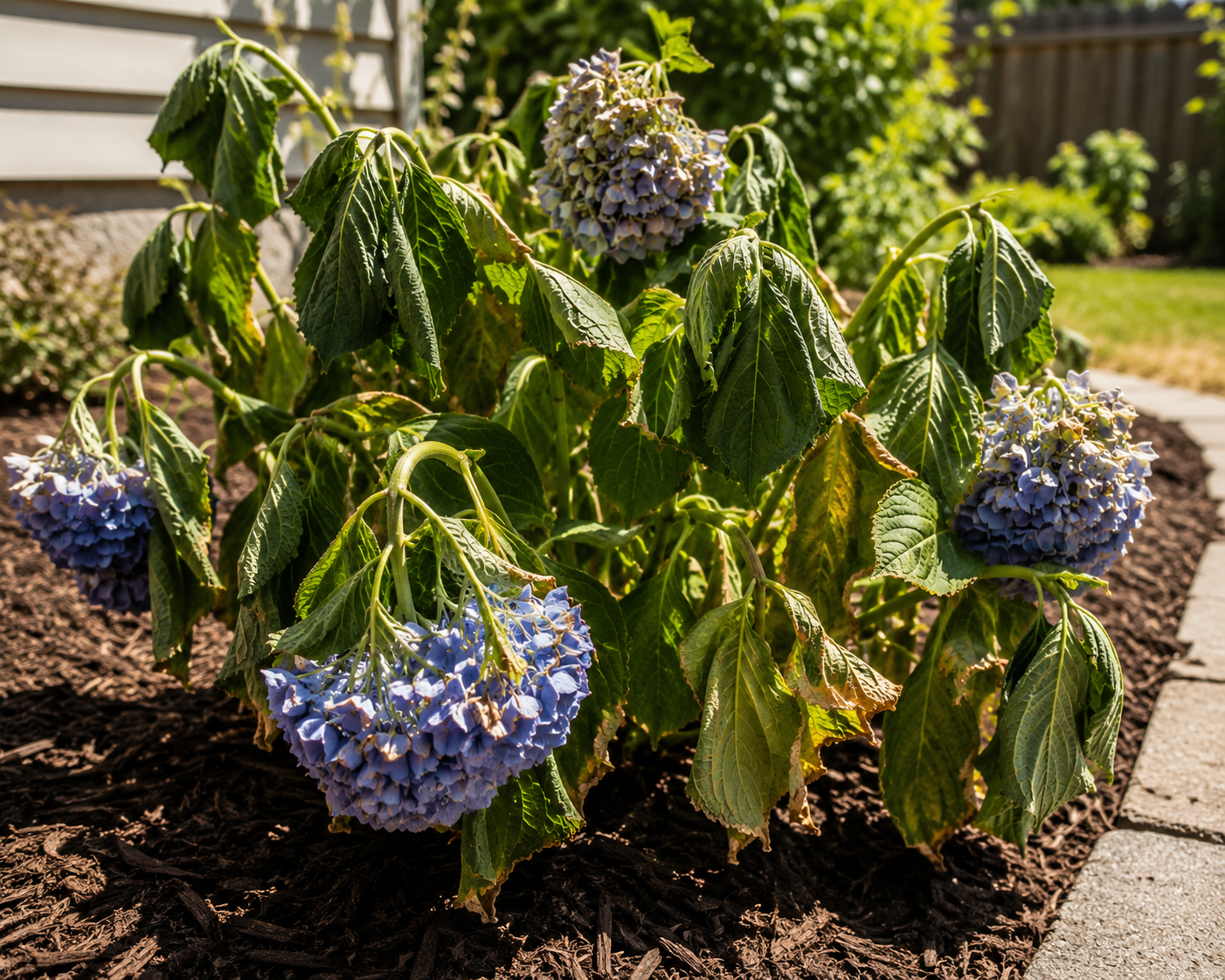
Summer heat waves can be stressful not only for people but also for plants. When temperatures climb into the 90s and beyond, landscapes can quickly show signs of stress, including wilting, scorched leaves, slowed growth, and even plant death.
Understanding how heat affects plants and how different plant types respond to drought can help homeowners and landscapers make better decisions when selecting, installing, and caring for landscape plants.
How Heat Affects Plants
Plants constantly lose water through a natural process called transpiration. Water moves from the roots through the plant and eventually evaporates through tiny openings (stomata) in the leaves.
During a heat wave, this process accelerates dramatically.
As temperatures rise:
Soil moisture evaporates more quickly
Plants lose water faster through their leaves
Root systems struggle to keep up with demand
Leaves may wilt to reduce moisture loss
Growth slows as the plant focuses on survival
If the plant loses water faster than its roots can absorb it, drought stress begins to occur.
Why Some Plants Handle Heat Better Than Others
Not all plants respond to heat in the same way.
One of the biggest factors is root depth.
Deep-Rooted Plants
Deep-rooted plants can access moisture much farther below the soil surface.
Benefits include:
Better drought tolerance
More stable moisture supply
Improved survival during extended heat waves
Less dependence on frequent irrigation
Examples often include:
Many native grasses
Established trees
Deep-rooted shrubs
Prairie and drought-adapted plants
Shallow-Rooted Plants
Shallow-rooted plants depend heavily on moisture near the soil surface.
During heat waves, the upper few inches of soil dry out quickly, making these plants more vulnerable to:
Wilting
Leaf scorch
Reduced flowering
Plant loss
Annual flowers and newly installed plants are often the most susceptible.
The Benefits of Native Plants
Native plants have evolved over thousands of years within their local climate conditions.
Because of this, many native species are naturally adapted to:
Local rainfall patterns
Seasonal drought conditions
Regional temperatures
Native soil types
In many areas, native plants require less supplemental irrigation once established.
For homeowners & industry professionals looking to reduce water use and maintenance, incorporating native species into the landscape can be an excellent long-term strategy.
However, even native plants may require supplemental water during extreme heat events, particularly during establishment.
Understanding Plant Hardiness Zones
Before selecting any plant, it's important to understand your local plant hardiness zone.
Plant hardiness zones are designed to help determine which plants can survive the average minimum winter temperatures in a region.
Choosing plants suited to your zone improves:
Plant survival
Long-term health
Winter hardiness
Overall landscape success
A plant that performs well in one region may struggle in another if it is outside its recommended zone range.
When purchasing plants, always verify that the plant is appropriate for your local climate and growing conditions.
Newly Installed Plants Need Extra Attention
Even drought-tolerant plants require regular watering during establishment.
A newly installed plant has not yet developed an extensive root system and cannot access moisture deep within the soil.
During the first growing season, newly installed plants often require:
More frequent watering
Consistent moisture
Monitoring during heat waves
Once roots become established, watering frequency can often be reduced significantly.
Watering During a Heat Wave
One of the most common mistakes made is watering at the wrong time of day.
Best Time to Water
The ideal watering times are:
Early morning (Best)
Late evening
These periods provide several advantages:
Reduced evaporation
More water reaches the root zone
Plants have moisture available before peak temperatures
Improved irrigation efficiency
Avoid Watering During the Hottest Part of the Day
Watering during the hottest hours of the afternoon is generally less effective because:
Water evaporates quickly
Less moisture reaches the roots
Irrigation efficiency decreases
In addition, water droplets sitting on stressed foliage during extreme heat can contribute to leaf damage under certain conditions.
Whenever possible, schedule irrigation during cooler periods of the day.
Deep Watering Is Better Than Frequent Shallow Watering
Many people water too often and too lightly.
Shallow watering encourages shallow roots.
Instead, deep watering helps:
Promote deeper root growth
Improve drought tolerance
Strengthen plant health
Reduce long-term irrigation needs
The goal is to thoroughly moisten the root zone rather than simply wetting the soil surface.
Mulch Helps Protect Plants
A quality mulch layer can significantly reduce heat stress.
Benefits include:
Reduced soil temperature
Less evaporation
Improved moisture retention
Fewer weeds competing for water
A 2–4 inch layer of mulch around trees, shrubs, and planting beds can provide valuable protection during hot weather.
Signs of Heat Stress
Watch for:
Wilting leaves
Leaf curling
Brown leaf edges
Premature leaf drop
Flower drop
Slowed growth
Early intervention can often prevent permanent damage.
Final Thoughts
Heat waves place significant stress on landscape plants, but proper plant selection and watering practices can dramatically improve survival and performance.
Choosing plants suited to your climate zone, incorporating native species, encouraging deep root development, and watering at the proper times of day are some of the best ways to protect your landscape during extreme heat.
Healthy landscapes are built long before the heat wave arrives. By selecting the right plants and establishing strong root systems, you can create landscapes that remain beautiful, resilient, and water-efficient even during the hottest days of summer.
Keep reading
More updates, releases, and estimating ideas are in the newsroom.